
Hello, if you are new to the game of darts allow me (Ade) to guide you, the game isn’t just some pub pastime; it’s a game steeped in history and tradition that brings people together both competitively and socially.
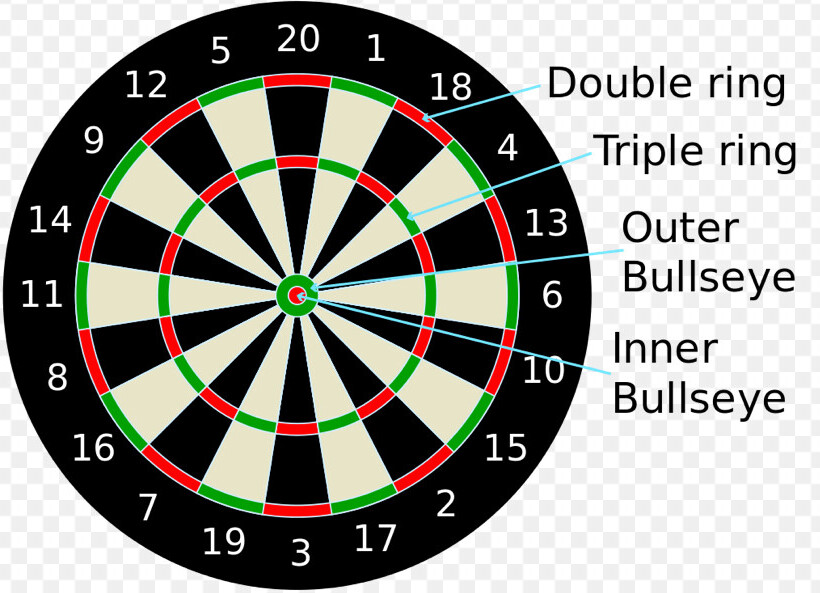
The very core of darts revolves around a board full of numbered segments, where the highest scores often steal the spotlight. The bullseye? Yep, it’s a big deal, but knowing why and how each part of the board matters can really up your game.
A game of darts typically known as ‘501’, is the bread and butter of this sport. Players aim to reduce their score from a starting point of 501 down to exactly zero.
Now, here’s the kicker: you have to finish on a double, and that can get tricky. While the pros make it look easy, there’s a real art to deciding whether to go for that risky triple 20 or play it safe.
Alongside 501, there’s also the quicker, beginner-friendly ‘301’ game. This is basically the same concept, just with fewer points to clear. But don’t underestimate it; ending on a double in 301 is just as satisfying. Both variations have their unique challenges and can really test your strategic thinking.
To play darts, you don’t need much, but some quality stuff makes all the difference: a proper bristle dartboard, a set of tungsten darts, and a neat setup without distractions. Sure, you might start at your local hangout or bar for example, but getting the right gear and setup at home turns practicing into a pleasure rather than just a pastime.
It’s all about creating an environment where the challenge feels real and every success, no matter how small, feels earned.
Understanding these basics has you all set to appreciate why darts holds a special place in the hearts of many. It’s not just throwing sharp objects at a board. It’s about anticipation, precision, and that sweet satisfaction when you hit your mark.
Darts Formats Across The World
Darts can be a bit different wherever you play, and that’s especially true when comparing formats across the globe. In the UK, the game takes on some unique flavors, blending tradition with modern competition styles. Here, it’s often about intense leg-to-leg battles rather than long-form games, making every throw count and adding to the thrill.
The UK stands out with terms like ‘Matchplay’ and ‘Sets’. Think of ‘Matchplay’ like a sprint; it’s all about being the quickest to zero in each leg and winning a required amount of legs at the tournament/event(s) discretion.
With ‘Sets’, it’s a marathon, requiring players to win a series of legs to take a set. The psychology is different, where pacing and nerves of steel come into play, offering a true test of consistency and resilience.
While the basic rules stay similar, like needing to finish on a double, regional differences can spice things up. Playing by the ‘Legs’ system means you’re always eyeing the short game, ideal for those with a killer instinct. In contrast, the ‘Total Points’ keeps the pressure on for the long haul, encouraging strategic play and patience.
In professional darts, for example the Professional Darts Corporation (PDC), who are the leaders in the professional game to date have raised the stakes, showcasing formats that influence amateurs and pros alike.
Their broadcasting brings the drama and skill of darts right into homes across the world, inspiring countless new players globally. These tournaments often become the blueprint for local competitions, helping everyone understand what’s at play and how they might compete if they choose to step up. The crowds & audiences that attend these (PDC) events nowadays are attended in staggeringly high numbers all over Europe and around the world due to its meteoric rise in popularity.

Regulation Setup: Crafting the Perfect Darts Environment
Setting up your dart space correctly can make all the difference, ensuring every throw feels just like the pros.
Whether you’re at home or setting up a local club, starting with the correct dimensions is key. The official height from the floor to the centre of the bullseye should be 5 feet 8 inches, and you need to stand exactly 7 feet 9.25 inches from the face of the board. Get these distances right, and you’ll be playing by the book.
Good lighting is just as important, helping you focus without shadows interfering. Soft, even lighting that highlights the board rather than blinds you is ideal. You want to see those numbers pop without any strain on your eyes, allowing you to concentrate purely on your game.
Safety seems obvious, but it’s often overlooked. Ensuring there’s enough space around for darts that miss their mark keep both the players, officials and surroundings safe. A wall protector or cabinet around the board helps prevent accidents when those aimed-for triples go astray.
Finally, choose a location that manages distractions. Whether it’s a corner of a basement or a garage away from the noise, a dedicated space lets you practice beyond just having fun. It’s where those skills sharpen and where each game becomes a stepping stone to mastery.
Diving Into the Rules of Darts: Mastering the Essentials

Understanding the rules of darts is like learning a language—once you’ve got it down, it opens up a world of possibilities.
First up, terminology is key.
Knowing your ‘double’, ‘treble’, ‘bullseye’, and ‘checkout’ isn’t just for show; it helps in strategising your game. A ‘leg’ forms the foundation of play, and hitting a ‘double’ to finish can turn the tide in your favor.
When it comes to the core rules, keep an eye on your score. Whether it’s 501, 301, or another format, reaching zero with a finishing double is the name of the game. It’s not just about raw accuracy but managing risk—deciding when to push for those high scores and when to play it safe. The art here isn’t just in your aiming, it’s in your planning.
Etiquette always rounds out the experience. Respect in darts isn’t just about who’s up next, but in keeping focus and appreciating great throws, whether they’re yours or your opponent’s. Good sportsmanship can enhance your enjoyment and even lead to better games as camaraderie builds.
Practicing effectively is where casual play meets skill-building. Consistent routines, like focusing on specific numbers or angles, make improvements visible over time.
Challenge yourself with different targets, and don’t shy away from feedback, whether it’s from fellow players or from self-assessment.
Each session is a chance to fine-tune that aim and deepen your understanding of the game.
Beginner’s Journey: How to Play and Excel in 301 Darts
301 darts is a fantastic starting point for newcomers, combining simplicity with just enough challenge to hook you in. You start with 301 points, aiming to deplete your score down to zero. The twist? To win, your final dart has to land on a double, adding that dash of suspense to every game.
Setting off is easy: each player starts with three darts per turn, subtracting the combined score of the darts thrown from 301. A single dart on a double 20, for instance, takes off 40 points. The real strategy kicks in as you start planning which numbers to hit to reach that nail-biting double finish.
Developing a winning strategy in 301 involves more than just aiming for the bullseye. Beginners are encouraged to aim for higher numbers but also practice their doubles regularly. Targeting common numbers like 20, 19, and 18 can make the final chase for a double easier when your score dwindles.
For those just getting started, steering clear of common pitfalls, like over-focusing on trebles or not planning two moves ahead, can smooth the learning curve. Watching how seasoned players manage their scores is also a goldmine of tactics—don’t shy away from picking up tips from them.
Excel in your play by making it a habit to review each session. Recognising where you might have aimed differently or which numbers threw you off balance can be invaluable. Keep it fun, keep it challenging, and watch as you go from newcomer to skilled player with each game.